Migration and crime fears loom over Chile's presidential runoff / Photo: RODRIGO ARANGUA - AFP

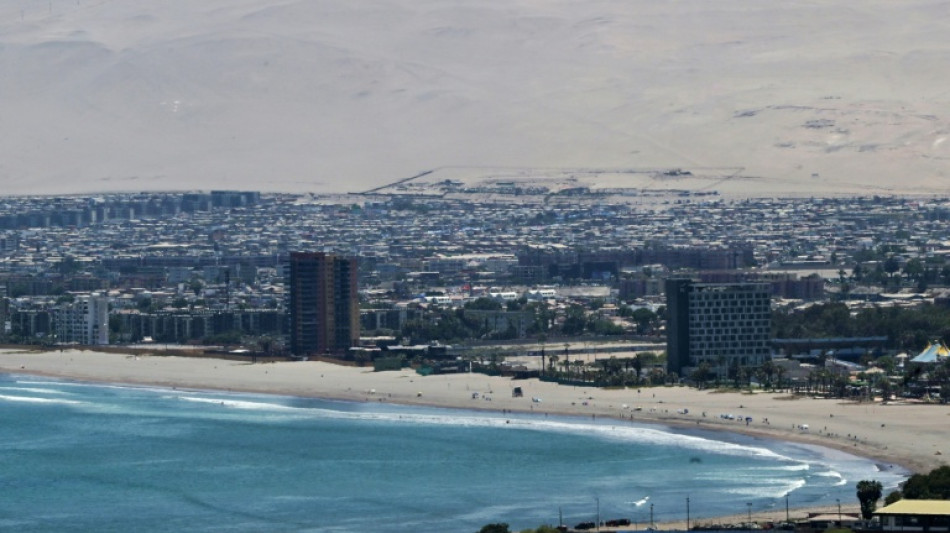
Crime and immigration are the issues dominating Chile's presidential election runoff -- nowhere more so than in the northern border city of Arica, where residents say fear has replaced the calm they once knew.
The December 14 vote will pit leftist candidate Jeannette Jara against her far-right rival Jose Antonio Kast, who leads polls and has vowed to expel hundreds of thousands of undocumented migrants.
Kast's hardline security plan has gained traction in Arica, on the Peruvian border, where homicides have surged and foreign gangs have taken root, residents told AFP.
About six miles (10 kilometers) from the city, one of Chile's busiest border crossings sees 5,000 people -- Chileans, Peruvians and Bolivians -- pass daily.
But since 2020, more migrants without papers have arrived, mostly Venezuelans escaping the economic and political tumult of their homeland.
Their numbers rose from 200 in 2018 to 5,000 in 2023, according to official figures from the Migration Service.
Residents told AFP they believe this influx has shattered Arica's calm.
The city of 250,000, located on an arid section of the Pacific coast, faces rising crime.
"Before, you could go to the beach at night and walk home. Now, you can't," said Paloma Cortes, 27, who sells makeup.
- Tren de Aragua -
Many migrants work in the service sector, but authorities say the Venezuelan gang known as Tren de Aragua arrived with them, spreading terror with kidnappings, extortion and killings.
Its members occupied abandoned houses in the Cerro Chuno neighborhood, near Cortes' home.
"Before, they would rob you and take your belongings. Now, they beat you, stab you, send you to the hospital," Cortes said.
"Contract killings, kidnappings -- these were things that didn't exist," said security guard Alfonso Aguayo, 49.
Arica's homicide rate jumped from 5.7 per 100,000 inhabitants in 2019 to 17.5 in 2022, nearly triple the national average.
Police dismantled the gang's leadership in 2022, raiding Cerro Chuno and finding a torture site and human remains.
Last March, courts sentenced 31 Venezuelans and three Chileans to a combined 560 years in prison.
The homicide rate fell to 9.9 last year but remains above the national average of 6.6, and local concerns over crime persist.
In the first round of presidential voting last month, right-wing candidates won three-quarters of the vote in Arica.
Economist Franco Parisi, who placed third nationwide, topped the list in the city, with proposals to expel irregular migrants and install anti-tank mines at the border.
Kast promises to deport 337,000 undocumented migrants nationwide as part of his anti-crime plan, and to build a trench along the frontier.
- 'Used to be safer' -
Despite the fear, migrants are also valued workers.
"Insecurity is not about immigration but about people's goodness or wickedness," said Fermin Burgos, 75, a retired teacher.
A member of his family employs two undocumented Venezuelan waitresses. "They're illegal, but they're excellent," he said.
Irregular migrants can access health care and send children to public schools.
Many work in the informal sector or as delivery drivers and are not pursued by authorities.
"When I arrived, there was cordiality. There wasn't this xenophobia," said Fernair Rondo, 35, a Venezuelan liquor store clerk who has lived in Chile for seven years.
"It used to be safer, but a few ruin it for everyone."
Migrants also fill gaps in providing health care.
Nationwide, 5.8 percent of doctors are foreign-born, according to regulators.
"In extreme areas like ours, local graduates cannot meet demand," said Claudia Villegas, Arica's municipal health director.
R.Bailey--MC-UK