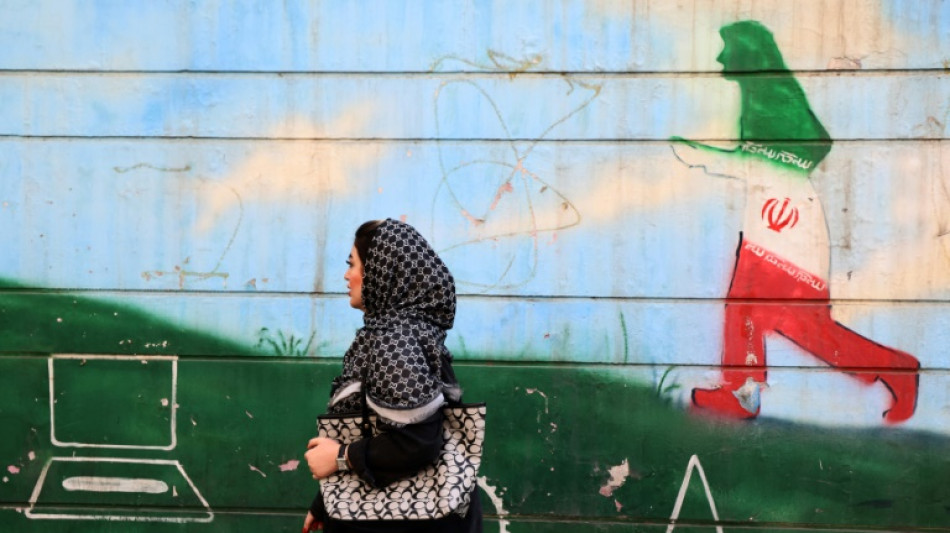
Iran negotiators arrive in Geneva for high-stakes US talks / Photo: ATTA KENARE - AFP
An Iranian delegation headed by its top diplomat arrived in Geneva on Wednesday for talks with the US, as the Islamic republic's president struck an upbeat tone about the prospect for a negotiated agreement to avert fresh conflict.
Donald Trump has repeatedly threatened strikes if Iran fails to cut a deal on its atomic programme, and in his State of the Union address on Tuesday, the US president accused Tehran of "sinister nuclear ambitions" after he ordered a massive military deployment around the Gulf.
Piling on the pressure, the US announced fresh sanctions targeting Iran on Wednesday as Vice President JD Vance warned Tehran to take Washington's threats of military action "seriously".
But Iranian President Masoud Pezeshkian said that he had a "favourable outlook for the negotiations".
"We are continuing the process under the guidance of the supreme leader so that we can move beyond this 'neither war nor peace' situation," Pezeshkian said in a speech.
Iranian Foreign Minister Abbas Araghchi and his negotiating team arrived in the Swiss city of Geneva on Wednesday for the crunch talks to be held the following day, Iran's government said.
The delegation is scheduled to meet with Oman's foreign minister later Wednesday evening "to present Iran's position on the lifting of sanctions and the nuclear issue", Iran's foreign ministry said in a statement.
Trump in his address said that Iran was "at this moment again pursuing their sinister nuclear ambitions".
But Iranian foreign ministry spokesman Esmaeil Baqaei refuted those claims as "simply the repetition of 'big lies'".
- 'Maximum pressure' -
The West believes Iran is seeking an atomic bomb, but Tehran insists its nuclear programme is peaceful.
"My preference is to solve this problem through diplomacy but one thing is certain: I will never allow the world's number one sponsor of terror, which they are by far, to have a nuclear weapon," Trump said.
Vance said Trump has "a number of other tools at his disposal to ensure" that Iran does not develop nuclear weapons.
"He's shown a willingness to use them and I hope the Iranians take it seriously in the negotiations tomorrow," the vice-president told Fox News.
The US Treasury Department also announced new sanctions targeting more than 30 individuals, entities and vessels said to be enabling "illicit Iranian petroleum sales" and weapons production.
Treasury Secretary Scott Bessent said the Trump administration will continue to push for "maximum pressure on Iran to target the regime's weapons capabilities and support for terrorism".
Iran and the US held five rounds of nuclear talks last year, but those negotiations ended after Israel's unprecedented attack on Iran triggered a 12-day war that Washington briefly joined.
During his first term, Trump withdrew from a landmark 2015 deal which offered Tehran sanctions relief in return for drastic curbs on Iran's nuclear programme.
- 'People are suffering' -
In recent weeks Trump has deployed two aircraft carrier groups and dozens of other warplanes to the region to back up his threats, and Iran has repeatedly said it would respond firmly to any attack, even a limited one.
Tehran residents who spoke to AFP on Wednesday were divided as to whether there would be renewed conflict.
Some said war was all but inevitable, while one salesman who gave his name as Mehdi predicted the negotiations would succeed, saying: "The Americans are bluffing."
Homemaker Tayebeh noted that Trump had "said that war would be very bad for Iran".
"There would be famine and people would suffer a lot. People are suffering now, but at least with war, our fate might be clear," she added.
"It looks like President Trump has cornered himself," Hokayem said, adding the US leader may have predicted the "Iranians would cave quickly", which they have yet to do.
"At this point, the force posture is such that if the US were to pull back without (an agreement), it could come at the credibility of the president himself."
D.Chapman--MC-UK