Oscar-nominated docs take on hot-button US social issues / Photo: VALERIE MACON - AFP/File
From racial tensions and school shootings to abortion and the prison system, this year's Oscar-nominated documentary short and feature films are taking a hard look at American society.
Several of the nominated filmmakers told AFP ahead of the March 15 gala in Hollywood that they hoped their work would spark debate.
They also were glad for the visibility that an Academy Award nomination brings, as documentaries are often independently made and rarely get the same exposure as big-budget features.
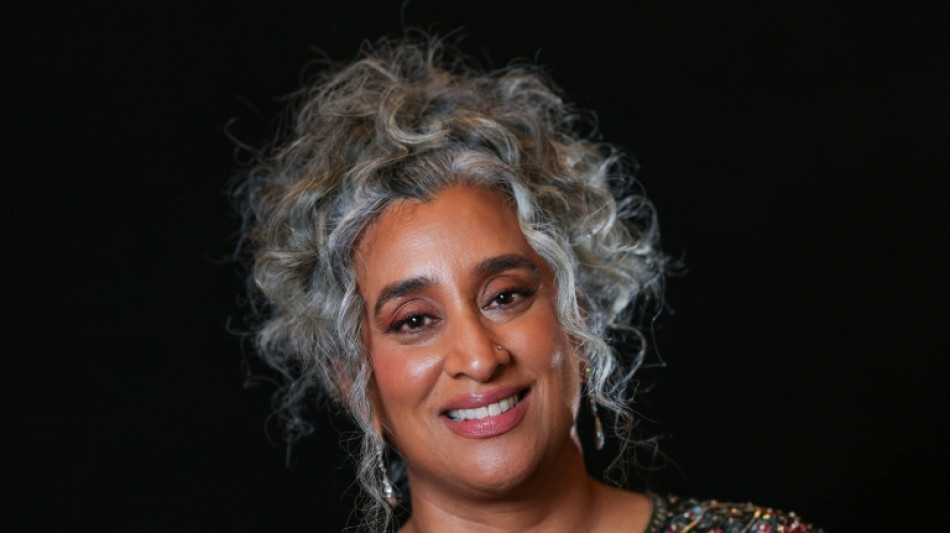
"I believe all art is political, and art is the vanguard of the revolution," Geeta Gandbhir, whose "The Perfect Neighbor" is competing for best documentary feature, told AFP.
The film, on Netflix, delves into the thorny collision of race, firearms and so-called "Stand Your Ground" laws as a dispute in a Florida neighborhood turns fatal.
"When you look at all my colleagues who are nominated in these categories, the films are deeply political," Gandbhir said.
"They all have something to say... about a pressing issue in some way," added the filmmaker, a double nominee with "The Devil Is Busy" competing for best documentary short.
That film, made in Atlanta, focuses on an abortion clinic beset by protesters after the US Supreme Court in 2022 eliminated the federal constitutional right to terminate a pregnancy.
Gandbhir's co-director Christalyn Hampton said they hoped to "humanize the hot-button topic" by focusing on a religious woman who runs security at the clinic.
The woman finds herself trying to manage the delicate balance of protecting patients and confronting demonstrators who, in some cases, are driven by beliefs that reflect her own.
"We felt like it was a very interesting and ironic twist," Hampton said.
She added that the filmmakers hoped their work could help women "start to advocate for themselves and their health care, and not to get bogged down in the policies and what politicians say they should do."
- 'Human issue' -
Director Joshua Seftel and journalist Steve Hartman sought to put a face on school shootings for everyday viewers when they made the documentary short "All the Empty Rooms."
To illustrate the epidemic, the pair visited the empty bedrooms of the children and youths killed by assailants.
"It's not a political issue, it's a human issue," Seftel told AFP.
"This is about something we all agree on, which is that we all want our kids to be safe when they go to school."
Hartman said he hoped that seeing those empty spaces would help audiences understand the void left when a child is killed, and "feel that loss" so that progress could be made.
Using a similar approach, Andrew Jarecki and Charlotte Kaufman lifted the lid on American prisons with documentary feature "The Alabama Solution."
"We have two million people incarcerated, so you can't really avoid it," Jarecki told AFP at a luncheon for Oscar nominees.
"But the prisons do everything they can to keep the press out, to keep filmmakers out."
Jarecki said filmmakers could help foster change by taking on tough subjects.
"Understanding and being able to see what (an issue) really is is the first step to fix it," he said.
- Attacks on the press -
The role of journalists in society, and the increasing threats they face in some places, is the subject of "Armed Only with a Camera: The Life and Death of Brent Renaud," the first US reporter killed after Russia launched its invasion of Ukraine in 2022.
"Sadly, we have now reached a point where -- according to the Committee to Protect Journalists -- it is the most deadly time on record to be a journalist," his brother and the film's director, Craig Renaud, told AFP.
Producer Juan Arredondo said the team hoped the film would raise awareness about the dangers faced by journalists everywhere, and not just those covering armed conflicts abroad.
"I think we have come into a time where what we have been covering for many years abroad is coming to the United States," he said, referring to increased attacks on and arrests of media professionals.
Arrendondo said he hoped that audiences would "realize the importance of journalism."
T.Matthews--MC-UK