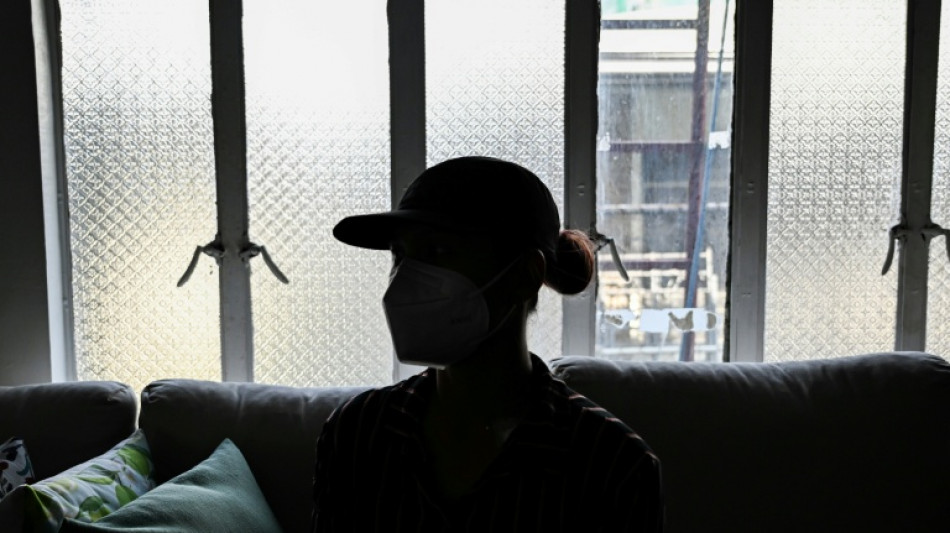
Filipinas seek abortions online in largely Catholic nation / Photo: Jam STA ROSA - AFP
Jane had been bleeding heavily for days before finally seeking help, not from a hospital but from the man who sold her the pills meant to end her six-week pregnancy.
Abortions are strictly outlawed in the mainly Catholic Philippines, forcing women to turn to a patchwork of providers operating in the online shadows.
While rare in practice, Philippine law allows for prison terms of up to six years for abortion patients and providers, leaving thousands of Filipinas to search for solutions in online forums where unlicensed sellers promote abortifacients.
"It was very painful, as if my abdomen was being twisted," Jane, whose name has been changed to protect her identity, told AFP, describing the visit where the seller, a purported doctor, inserted a pill into her cervix without anaesthesia.
Jane was warned not to disclose the abortion if anything went wrong, she said.
"I heard stories that some women were reported to the police, ignored or left to die when they reached the hospital," the 31-year-old added.
While post-abortion care has been legal for over a decade, many health workers remain hesitant to provide it, over fears of being arrested or losing their licenses, said Junice Melgar, whose Likhaan Center for Women's Health serves Manila's poorest.
"I believe that a lot of providers... would like to help. They might find it ethical, but it's a scary proposition for them," she said.
- 'A chilling effect' -
As women have flocked to online sources, authorities have taken notice.
In January, a lawmaker filed a resolution calling for an investigation into the growing number of Filipinas resorting to social media for help in ending their pregnancies.
The Senate last year also urged the Department of Health and the Food and Drug Administration to crack down on what a top lawmaker called "brazen crimes".
But Jane, while acknowledging the potential safety issues, said she feared targeting online sources would only further limit access to a much-needed medical procedure.
"There might be a chilling effect, and we won't know where else we can get the proper information," she said.
A reproductive health services law passed in 2012 aimed to normalise comprehensive sex education and free contraceptives across the country.
But the measure faced fierce opposition from the Catholic Church and conservative legislators, who weakened its implementation.
Funding was slashed, healthcare workers were allowed to refuse services, and access to emergency contraceptives like Plan B was heavily restricted.
"The Catholic Church will always oppose abortion and its applications," priest Dan Cancino of the Catholic Bishops' Conference of the Philippines told AFP, citing its commitment to the preservation and dignity of human life.
In rare situations, such as ectopic pregnancies that threaten a woman's life, interventions that might lead to fetal death can be morally permissible, he said.
But the Church's position against "intentional abortions" is absolute, he said, even in cases of rape or on grounds of mental health or financial hardship.
Cancino said the Church provides support to mothers and children facing unintended pregnancies, though he admitted those efforts remain "very fragmented".
Lawyer Clara Padilla of the Philippine Safe Abortion Advocacy Network (PINSAN), meanwhile, said even legal exceptions for rape, incest or health risks would "not be enough", noting most abortions were sought by married women with at least three children.
- 'People need this' -
More than 250 women are hospitalised every day due to complications from unsafe abortions, according to a PINSAN study. About three of them die.
Padilla said her group has documented cases of women binding their stomachs, inserting wire hangers into their cervix, or even asking people to kick them in attempts to induce abortion.
"Some people are opposing (abortion) because it's against their morals," Padilla said.
"We're just saying that people need this, and you shouldn't be barring them from accessing healthcare that can save their lives."
Even if contraceptives were easily available, abortion would remain a necessary backstop for women for whom an unplanned pregnancy can mean sliding further into poverty and violence, said the Likhaan Center's Melgar.
"There will be rapes, there will be other circumstances where protection simply does not work," she said.
Jane, who said she suffered from abdominal pain, weakness and loss of appetite for up to three months after the procedure, told AFP she would make the same decision if forced to do it over.
"When you talk about abortion in the Philippines, the discussion is reduced to whether it is legal or moral. People forget that abortion is a health issue," she said.
"This is my body, my health, my life, and it's up to me to decide what happens to it."
A.White--MC-UK