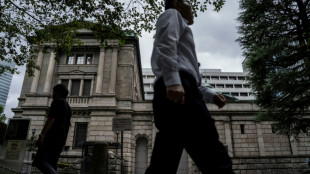
Bank of Japan hikes rates to 31-year high to battle inflation / Photo: Toshifumi KITAMURA - AFP
The Bank of Japan raised interest rates to a more than 30-year high on Friday and said it would lift them further as it looks to counter inflation fuelled by surging energy prices and a weak yen.
The 25-basis-point hike to 1.25 percent was expected by markets following the recent tightening by the European Central Bank and the US Federal Reserve, though the decision was not unanimous as it was carried by a 7-2 majority vote.
Pressure has increased on officials to further tighten monetary policy as a spike in oil prices caused by the Middle East crisis -- which shows little sign of ending anytime soon -- is expected to keep putting upward pressure on inflation.
"Given that underlying CPI inflation has been approaching two percent and financial conditions have been accommodative, the bank will continue to raise the policy interest rate," the BoJ said on its website.
Central bankers are keeping tabs on movements in the yen, which fell to a 40-year low against the dollar in July, prompting a historic joint US-Japanese intervention in foreign exchange markets.
The unit has been weighed in particular by the wide gap between Japan's still low interest rates and those of the Federal Reserve, which encouraged investors to favour better-yielding dollar-denominated assets.
Despite the hike to the highest since 1995, which had been telegraphed for weeks, the yen weakened to more than 157 per dollar, compared with around 156.30 before the announcement.
The cheap yen is driving up the cost of imported goods, which in turn is putting upward pressure on inflation.
Still, figures on Friday showed inflation slowed slightly last month.
Core inflation fell to 1.7 percent in August from 1.8 percent but remains close to the BoJ's two percent target.
The reading from the internal affairs ministry, which excludes volatile fresh food prices, was lower than forecasts for 1.8 percent.
Government support for gasoline and electricity fees contributed to the slower pace of inflation, the data showed.
However, the reprieve could prove very short-lived for resource-poor Japan after energy and gas prices soared in recent weeks because of the Middle East crisis.
"Inflation was little changed in August but there are mounting signs that higher energy costs are feeding through and we expect it to rise above the BoJ's two percent target before long," said Marcel Thieliant of Capital Economics.
The government is trying to mitigate the impact of inflation on household purchasing power, notably with a massive stimulus package adopted at the end of 2025, extensive tax breaks on energy, and measures adopted in the spring to support consumption.
Tokyo also decided this week on a drastic two-year reduction in the consumption tax on food products, from eight percent to one percent starting in April 2027.
R.Gibson--MC-UK