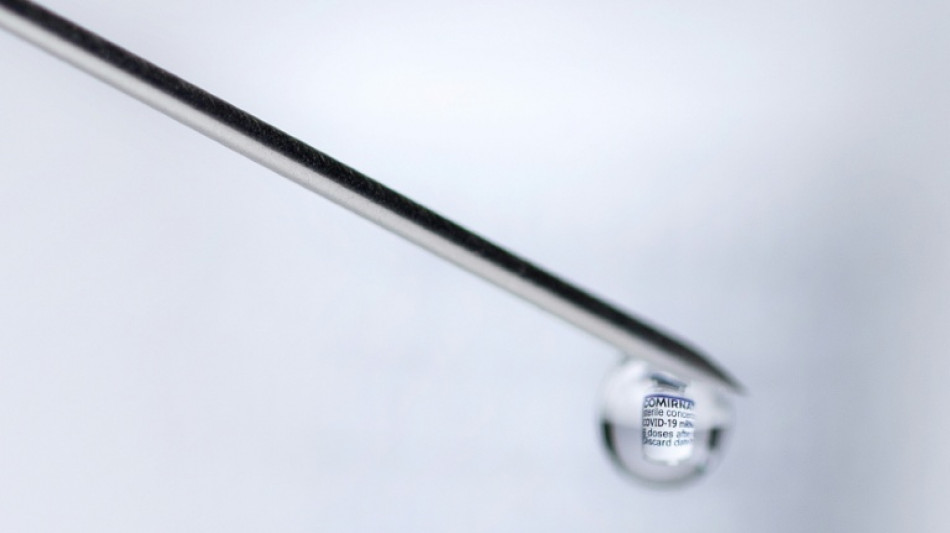
WHO chief urges countries to complete pandemic agreement / Photo: JOEL SAGET - AFP
The World Health Organization chief on Monday urged countries to complete the missing piece of a pandemic agreement designed to avoid the panic and chaos of Covid-19 this week.
WHO member states meeting at the UN health agency's Geneva headquarters have until Saturday to thrash out the trickiest bit of the entire treaty -- the nuts and bolts of how a vital portion of the text will work in practice.
"We must get this done. The next pandemic will not wait," WHO chief Tedros Adhanom Ghebreyesus insisted.
He urged nations not to fall for the "dangerous temptation" to opt for yet more negotiating time, as the "increasingly unfavourable climate" would only mean "this will get harder, not easier".
In May 2025, WHO member states adopted a landmark pandemic agreement on tackling future health crises, after more than three years of negotiations sparked by the shock of Covid-19.
The accord aims to prevent future pandemics from leading to the disjointed responses and international disarray that surrounded the coronavirus crisis by improving global coordination, surveillance and access to vaccines.
But the heartbeat of the treaty, the Pathogen Access and Benefit-Sharing (PABS) system, was left aside in order to get the deal over the line.
Countries were given another year to sort out the details of how it will operate.
The PABS mechanism deals with sharing access to pathogens with pandemic potential, then sharing the benefits derived from them: vaccines, tests and treatments.
Countries are tasked with getting PABS finalised by the next World Health Assembly, the WHO's decision-making body, in mid-May.
- 'Not there yet' -
Tedros welcomed negotiators back on Monday for the sixth and "for what we all hope will be the final meeting" on finalising PABS.
"We're so close -- but of course, we're not there yet," he said, warning that it was "probably the only chance" to secure an outcome.
"The conflict in the Middle East and crises elsewhere in our world are reminders that health emergencies can erupt suddenly and affect multiple countries, increasing the risk of disease outbreaks."
Tedros, who led the WHO during Covid-19, said countries must ask themselves whether the text would solve the problems faced during the pandemic.
"We need to do everything in our collective power to finalise the (deal) so we do not waste the last four-and-a-half years," he said.
"If we don't, we are left with the status quo: no PABS system, and a Pandemic Agreement that exists only on paper."
S.Relish--MC-UK