Roadless Rule repeal proposal raises concerns over Midwest forests and fire risk
A federal proposal to repeal the 2001 Roadless Rule would remove protections from millions of acres of national forest, including about 512,000 acres in the Midwest. Conservation groups question the administration's wildfire and timber arguments as public comments remain open until October 6.
The US Forest Service is proposing to rescind the 2001 Roadless Rule, which restricts road construction and timber harvesting across approximately 58.2 million acres of inventoried roadless land. Agriculture Secretary Brooke Rollins announced the formal proposal on August 18.
The Midwest accounts for roughly 512,000 acres covered by the rule, a relatively small share of the national total. According to the Environmental Law and Policy Center, extensive logging from the mid-19th century through the early 20th century left the region with comparatively little roadless forest.
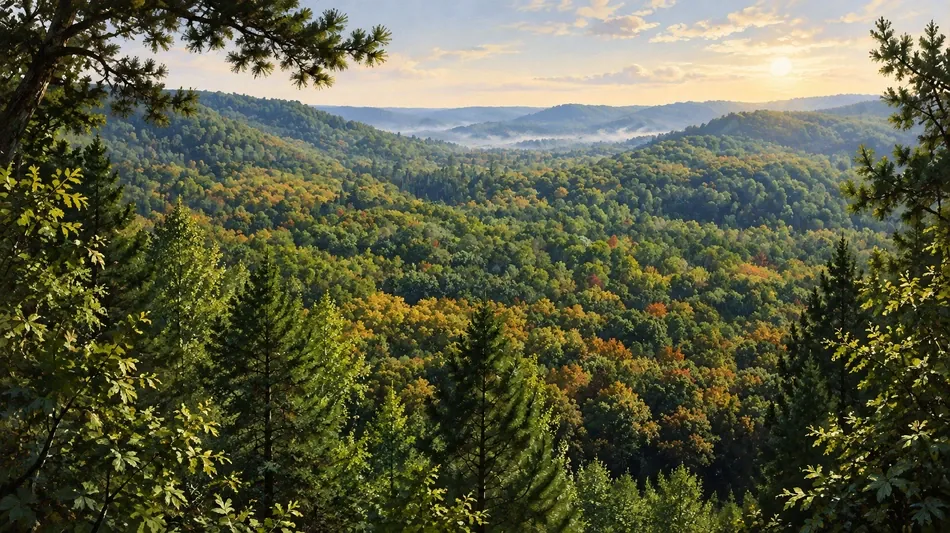
Among the areas affected would be about 4,300 acres of Norwich Plains in Michigan's Ottawa National Forest. Its northern hardwood forest includes sugar maples and old-growth aspens, as well as habitat for wildlife including eastern gray wolves and American martens.
Beaver ponds, meadows and trout streams form part of the landscape. The Norwich Bluff trail rises about 500 feet above the surrounding area. Limited logging and federal protection have helped preserve the tract, which could become more accessible to roads and timber operations under repeal.
The Department of Agriculture argues that removing the rule would improve forest health, reduce wildfire risk, expand timber access and allow greater local influence over forest management. Opponents say the draft environmental impact statement does not substantiate all of those claims and acknowledges substantial possible harm.
Kelly Thayer, a Michigan-based senior policy advocate at the Environmental Law and Policy Center, said the affected tracts represent some of the state's least disturbed landscapes. He helped prepare the organization's comments opposing repeal and questioned whether the environmental review adequately justifies the change.
The present proposal follows a notice issued in August of the previous year seeking input on preparing an environmental impact statement. That earlier process allowed 21 days for comment and generated more than 600,000 submissions, including opposition from conservation organizations, tribal groups and other stakeholders.
The formal proposal initially carried a 30-day comment period ending September 21. On September 11, USDA added 15 days, setting a new deadline of October 6, 2026. Comments can be submitted through regulations.gov.
That extension followed a September 8 letter from 22 Midwest organizations, including the Environmental Law and Policy Center, asking for a 120-day comment period. The additional time granted was substantially shorter than their request.
Wildfire is one of the principal points of disagreement. The draft review lists increased human-caused fire frequency among possible effects of road construction and timber harvesting. Other listed risks include sediment entering waterways, habitat fragmentation, damage to sensitive species and reduced scenic quality.
The document also identifies possible losses to recreation, impacts on resources important to tribes and reductions in primitive or semi-primitive recreational settings. Critics say these acknowledged effects complicate the administration's claim that opening roadless areas would improve forest conditions.
Aaron Bloom, a senior attorney in Earthjustice's Biodiversity Defense Program, said the review acknowledges that roads can bring more ignition sources without establishing that repeal would produce a net fire-prevention benefit. He disputes wildfire prevention as a sufficient justification for the proposal.
Bloom also sees a conflict between promises of local control and national directives to increase logging. The draft cites Executive Order 14225, Immediate Expansion of American Timber Production, which directs the Forest Service to expand timber output, streamline regulation and update management practices.
In Bloom's view, a rescission intended to implement a top-down timber directive cannot simultaneously be justified entirely as a transfer of authority to individual forests and local communities.
He further criticized the planned public-hearing process. He said four hearings were scheduled, compared with about 600 during development of the original rule, and that the current hearings focus on Alaska-specific issues and fall outside the comment period.
Earthjustice has worked with other organizations against repeal since USDA announced its intent the previous year. Bloom said the final outcome remains uncertain, but that a complete rescission would prompt a court challenge.
Collier said road construction is already considered within existing timber operations, with an emphasis on choosing methods that cause the least practicable harm. Opening a protected area would therefore not remove the need to assess terrain, access costs and effects on nearby waters.
Questions also remain about the practical demand for additional timber in Midwestern roadless areas. National forests already operate under individual timber quotas assigned by the Forest Service. USDA and the Forest Service did not respond to requests for comment about the proposal.
Chris Collier, Great Lakes program manager at Trout Unlimited, said his organization already works with the Forest Service and state regulators on meeting timber targets while protecting forests and limiting road impacts.
Some roadless tracts would remain difficult and expensive to log even if legal restrictions were lifted. Collier pointed to hills, wetlands and steep terrain vulnerable to erosion, saying the cost of building access roads would have to be evaluated for each proposed harvest.
He also warned of consequences for streams, rivers, fish and habitat, with effects potentially extending downstream into the Great Lakes. Those considerations are separate from whether a tract can legally be opened to logging.
Thayer argued that the Midwest already has more timber available than buyers require. In the Forest Service's 20-state Eastern Region, Wisconsin's Chequamegon-Nicolet National Forest produces the most timber, followed closely by Ottawa, according to the report.
Some proposed Ottawa logging areas receive no bids from timber companies, Thayer said. He cited that experience in questioning the need to open additional protected acreage for commercial harvesting.
The process remains at the proposal stage. Public input, the final environmental analysis and any subsequent legal challenge will shape whether the rule is rescinded and how the remaining roadless forest in the Midwest is managed.
S.Robinson--MC-UK