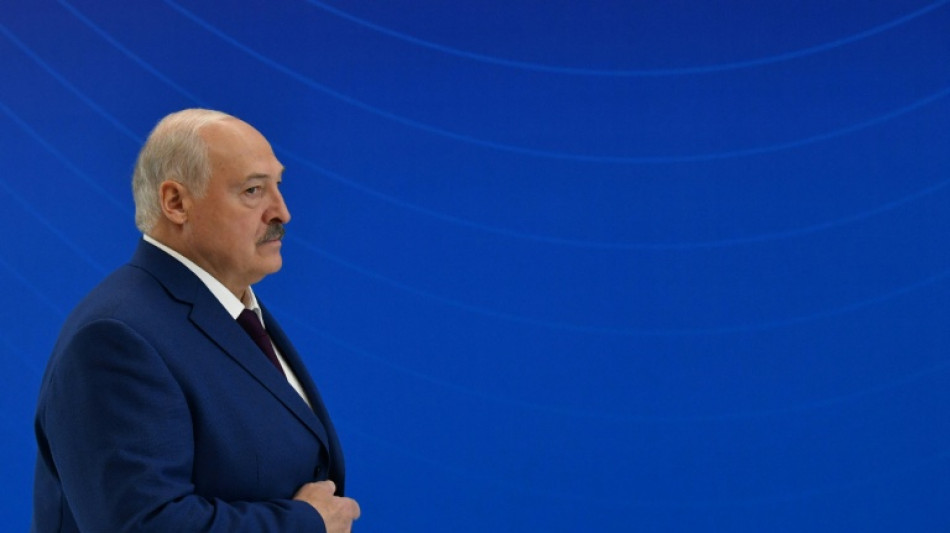
What next for Belarus after US deal on prisoners, sanctions? / Photo: Vyacheslav OSELEDKO - AFP
Belarus freed dozens of political prisoners over the weekend in exchange for the United States lifting some sanctions on the reclusive Moscow-allied country after talks that also implicated Ukraine.
The West imposed sanctions on Belarus -- ruled by President Alexander Lukashenko since 1994 -- for its crackdown on 2020 protests and helping Russia invade Ukraine in 2022.
Here are some possible consequences of the re-opening of Minsk-Washington ties as talks look set to continue.
- Prisoners for potash -
The US special envoy for Belarus, John Coale, visited Minsk on Saturday and announced Washington was lifting sanctions on Belarus's potash.
Belarus is a major producer of the compound, used to make fertiliser.
According to a document published Monday by the US Treasury Department, Washington now allows trade with three Belarusian companies from the sector: Joint Stock Company Belarusian Potash Company, Agrorozkvit LLC and Belaruskali.
The US slapped sanctions on Belarusian potash under Joe Biden after Minsk arrested thousands following the 2020 protests and allowed Moscow to use its territory to invade Ukraine in 2022.
In exchange for the lifting of the measures, Minsk freed 123 prisoners -- including protest leader Maria Kolesnikova, Lukashenko challenger Viktor Babariko, Nobel Prize winner Ales Bialiatski and journalist Marina Zolotova.
An American and five Ukrainians were also among those Belarus released.
Belarusians and Russians detained in Ukraine were then freed by Kyiv, Minsk said.
- US in 'driver's seat' -
In their talks with Minsk, the Americans are "in the driver's seat", receiving requests from various countries in the EU and Kyiv, Belarusian political expert Artyom Shraibman said in a video published on the Carnegie Centre website.
In his view, US President Donald Trump wants diplomatic successes on various fronts that are "humanitarian and demonstrative" in order to get the Nobel Peace Prize -- but also to ease tensions in Eastern Europe.
As it tries to end the war in Ukraine, the US also considers Lukashenko useful because of his decades-old relationship with Russia's Vladimir Putin.
While in Minsk over the weekend, US envoy Coale said Lukashenko had given "advice" on Putin to the US, which he called "very useful" for talks on Ukraine.
Western leaders stopped talking to Lukashenko -- in power since 1994 -- after the suppression of 2020 protests and the massive crackdown that followed.
But for Trump, "the idea of not talking to dictators is completely alien", offering an opening for dialogue between Minsk and Washington, Shraibman said.
He added that it was "easier" for the US to talk to Lukashenko than to Putin because he is "less ideologically obsessed" on Ukraine and "less concerned about his place in the world".
- Regime hopes -
Minsk hopes the dialogue with Washington will lead to the eventual lifting of other heavy sanctions on its economy, particularly the banking sector -- or those targeting Lukashenko's inner circles, Shraibman said.
The lifting of sanctions on potash does not guarantee an end to export restrictions as European sanctions still prevent its transport to the EU and its ports.
But Lukashenko's regime hopes this is just the beginning.
The situation in Belarus remains "difficult" due to EU sanctions but will improve thanks to renewed dialogue with the US, Belarusian MP Alexander Shpakovsky said on Telegram.
Shraibman said countries like India or Brazil will likely be less hesitant now to purchase Belarusian potash as they will no longer fear secondary US sanctions.
The opposition, freed dissidents and activists have said that meanwhile, repression in Belarus is not dying down.
Rights group Viasna says there are currently some 1,200 political prisoners in the country.
- Challenges for opposition -
The weekend releases have provided a source of hope and strength for Belarus's dissident community.
Interviewed by AFP Sunday, Nobel Prize winner Bialiatski vowed to keep fighting for human rights in Belarus from forced exile.
"There are a lot of things we can do," he said, while warning that the regime is "freeing people with one hand and imprisoning people with the other".
But the anti-Lukashenko movement has also seen some divisions.
In June, the liberation of Sergei Tikhanovsky -- the husband of exiled opposition leader Svetlana Tikhanovskaya -- caused some turmoil in the opposition.
Tikhanovsky has made several controversial statements -- including criticising Belarusians for not sending him enough money.
"This did not strengthen the opposition in exile, quite the contrary," Shraibman said.
The infighting showed that Lukashenko could have "little to lose" by releasing others -- especially if it would increase harmful "competition" and "mutual misunderstandings" within the opposition.
W.Elffire--MC-UK