Trump says considering 'winding down' Iran war, US eases oil sanctions
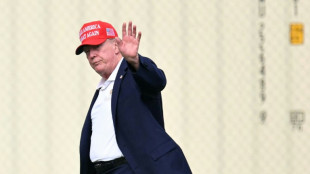
President Donald Trump said Friday that he was considering "winding down" military operations against Iran, as the United States temporarily eased sanctions on Iranian oil shipments to stem a global supply crisis.
Iran launched a new wave of drone and missile attacks on Saudi Arabia and Israel meanwhile after supreme leader Mojtaba Khamenei claimed to have dealt a "dizzying blow" to his country's enemies.
Trump, in a post on Truth Social, said the United States was "getting very close to meeting our objectives as we consider winding down our great Military efforts in the Middle East."
His post was the strongest indication yet that he may be prepared to soon end hostilities that began on February 28.
White House Press Secretary Karoline Leavitt, in a post on X shortly after Trump's message, said "the President and the Pentagon predicted it would take approximately 4-6 weeks to achieve this mission."
"Tomorrow marks week 3 -- and the US Armed Forces are doing an exceptional job," Leavitt continued. "Day by day, the Iranian Regime is being crippled, and their ability to threaten the United States and our allies is being significantly weakened."
Amid growing concern over oil prices and global supply shortages, the US Treasury said it was temporarily lifting sanctions on Iranian oil already loaded onto vessels.
The authorization allows for the delivery and sale of Iranian crude oil and other petroleum products loaded onto ships before March 20 and will last through April 19, it said.
"By temporarily unlocking this existing supply for the world, the United States will quickly bring approximately 140 million barrels of oil to global markets, expanding the amount of worldwide energy and helping to relieve the temporary pressures on supply caused by Iran," Treasury Secretary Scott Bessent said.
- 'Dangerous escalation' -
Iran's de facto blockade of the Strait of Hormuz, through which 20 percent of the world's oil and gas normally flows, and the numerous attacks on energy infrastructure in the Middle East have sent crude oil prices soaring.
A barrel of North Sea Brent crude was up 3.26 percent on Friday to $112.19.
On Wall Street, stocks ended sharply lower after oil prices shot up on fears that lengthy supply disruptions would lead to a global economic downturn.
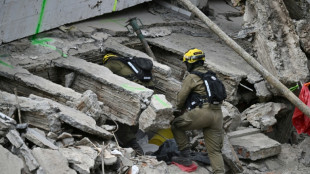
Fresh blasts hit Tehran on Friday and Israel accused Iran of attacking holy sites in Jerusalem after a strike left a crater in the Old City near the Al-Aqsa Mosque, the Western Wall and the Church of the Holy Sepulchre.
Saudi Arabia said it "intercepted and destroyed" more than 20 Iranian drones in the east of the kingdom early Saturday, while Israel said a new wave of missiles had been fired from Iran.
Iranian attacks continued meanwhile on energy infrastructure in the Gulf.
On Friday, drone attacks hit Kuwait's giant Mina Al-Ahmadi refinery, causing a fire that was later brought under control, a day after a direct hit on Qatar's vital Ras Laffan natural gas facility.
In other developments, the Israeli military said it had launched a wave of strikes on Lebanon's capital Beirut early Saturday targeting the Iran-backed militant group Hezbollah, after calling on residents of several areas to evacuate.
Turkey lashed out at Israel meanwhile for striking Syrian army camps in southern Syria, calling it a "dangerous escalation."
Syria has so far avoided being dragged into the regional war.
- 'We have won' -
Trump told reporters at the White House on Friday he was not looking for a truce with the Islamic Republic.
"I think we have won," he said. "I don't want to do a ceasefire. You know you don't do a ceasefire when you're literally obliterating the other side."
Trump, after slamming NATO allies as "cowards," said other nations would have to take responsibility for securing the Strait of Hormuz.
"The Hormuz Strait will have to be guarded and policed, as necessary, by other Nations who use it -- The United States does not!" he posted.
"If asked, we will help these Countries in their Hormuz efforts, but it shouldn't be necessary once Iran's threat is eradicated."
Trump said the United States wanted to talk to Iran but "there's nobody to talk to" because of the killing of Iran's former supreme leader and other top officials.
Iran's new supreme leader has not appeared in public since being named to succeed his father, Ali Khamenei.
In a written statement to mark Nowruz, the Persian New Year, Mojtaba Khamenei said Iranians have "dealt him (the enemy) a dizzying blow so that he now starts uttering contradictory words and nonsense."
"At the moment, due to the particular unity that has been created between you our compatriots... the enemy has been defeated," Khamenei said.
Trump has repeatedly said he does not plan to send ground troops into combat with Iran, but The Wall Street Journal reported that an additional 2,200 to 2,500 US Marines were headed to the region.
Trump would not confirm a report by the Axios news outlet that he was considering an occupation or blockade of Iran's Kharg Island oil hub to pressure Tehran to reopen the strait.
US forces hit Kharg with strikes that Trump said had "totally obliterated" all military targets on the island, but Washington has so far avoided hitting its oil infrastructure.
burs/cl/js
M.Payne--MC-UK