Senior Iranian officer says fresh conflict with US 'likely' / Photo: - - AFP
A senior Iranian military officer said on Saturday that renewed fighting with the US was "likely", hours after President Donald Trump said he was not satisfied with an Iranian negotiating proposal.
Iran delivered the new draft to mediator Pakistan on Thursday evening, state media reported, without detailing its contents.
The war, launched by the United States and Israel in late February, has been on hold since April 8, with one failed round of peace talks having taken place in Pakistan.
"At this moment I'm not satisfied with what they're offering," Trump told reporters, blaming the stalled talks on "tremendous discord" within Iran's leadership.
He added that the decision he faced was between whether to "just blast the hell out of them" or to "try and make a deal", saying he would rather not take the first option.
On Saturday, Mohammad Jafar Asadi, a senior figure in the Iranian military's central command, said "a renewed conflict between Iran and the United States is likely".
"Evidence has shown that the United States is not committed to any promises or agreements," he added, in quotes published by Iran's Fars news agency.
Deputy foreign minister Kazem Gharibabadi told diplomats in Tehran "the ball is in the United States' court to choose the path of diplomacy or the continuation of a confrontational approach".
Iran, he said, was "prepared for both paths".
- 'Hypocritical' -
The White House has declined to provide details on the latest Iranian proposal, but news site Axios reported that US envoy Steve Witkoff had submitted amendments to a previous one putting Tehran's nuclear programme back on the negotiating table.
Iran's mission to the UN pointed to the massive US nuclear arsenal, accusing Washington on Saturday of "hypocritical behaviour" towards Iran's own atomic ambitions.
There was no legal "restriction on the level of uranium enrichment, so long as it is conducted under the IAEA's supervision, as was the case with Iran", it said, using the abbreviation for the UN nuclear watchdog.
News of the new Iranian proposal had briefly pushed oil prices down nearly five percent, though they remain about 50 percent above pre-war levels amid the ongoing closure of the Strait of Hormuz.
Iran has maintained a stranglehold on the strait since the war began, choking off major flows of oil, gas and fertiliser to the world economy, while the United States has imposed a counter-blockade on Iranian ports.
The vice speaker of Iran's parliament, Ali Nikzad, said that under draft legislation being considered for managing the waterway, 30 percent of tolls collected would go towards military infrastructure, with the rest earmarked for "economic development".
"Managing the Strait of Hormuz is more important than acquiring nuclear weapons," he said.
Fighting meanwhile continued Saturday in Lebanon, where Israel has carried out deadly strikes despite a separate truce with the Iran-backed armed group Hezbollah.
The Israeli military said it had struck dozens of Hezbollah targets across southern Lebanon following evacuation warnings for nine villages. Hezbollah, for its part, claimed several attacks targeting Israeli troops.
The Israeli strikes included one in the village of Yaroun on what its military called a "religious building," which was damaged.
The French Catholic charity L'Oeuvre d'Orient said the troops had "destroyed" a convent belonging to the Salvatorian Sisters, a Greek-Catholic religious order with which the charity is affiliated.
- 'Terminated' -
In Washington, lawmakers were wrestling over whether Trump had breached a deadline to seek congressional approval for the war.
Administration officials argue the ceasefire paused a 60-day clock, after which congressional authorisation would be required -- a claim disputed by opposition Democrats.
"There has been no exchange of fire between United States Forces and Iran since April 7, 2026," Trump said in letters to congressional leaders, adding that the hostilities "have terminated".
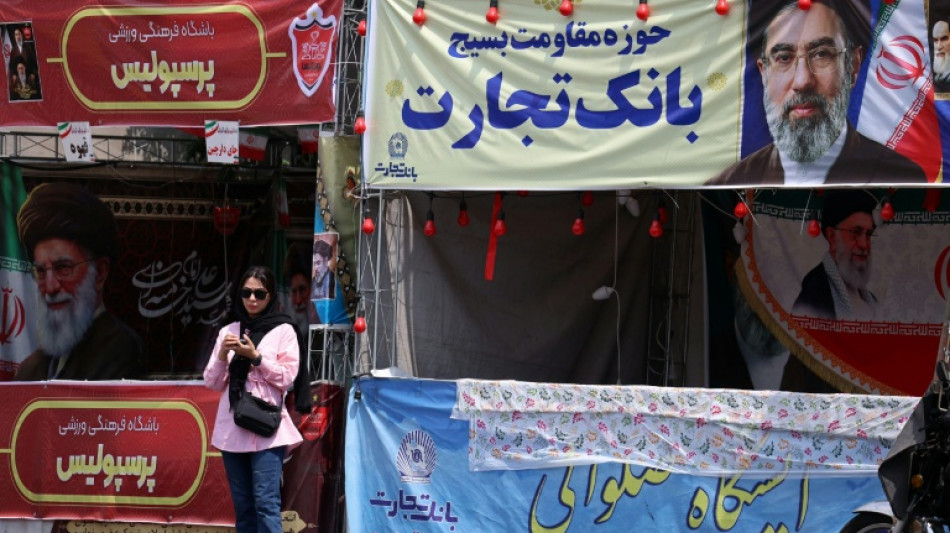
In Iran, the war's economic toll is deepening, with oil exports crimped and inflation surging past 50 percent.
"Everyone is trying to endure it, but... they are falling apart," 40-year-old Amir, a Tehran resident, told an AFP reporter based outside the country.
"We still have not seen much of the economic effects because everyone had a bit of savings. They had some gold and dollars for a rainy day. When they run out, things will change."
burs-dcp/acb/sst
E.Quill--MC-UK