'I miss my home': Cambodians displaced by conflict start over / Photo: TANG CHHIN Sothy - AFP
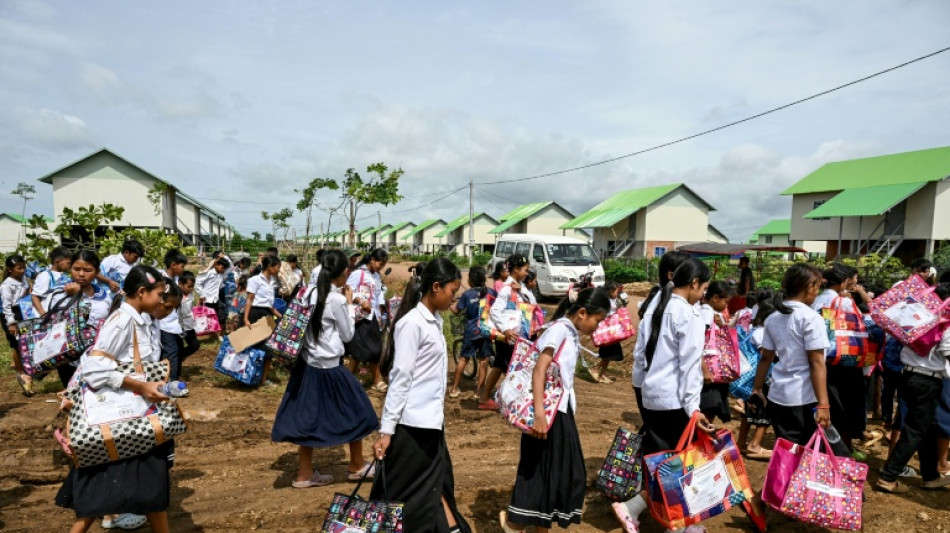
More than 3,000 new identical houses rise in a grid formation from a Cambodian plain not far from the Thai border, but most of the residents, displaced by conflict, just want to return home.
The government built the so-called "waiting village" for Cambodian families forced to flee last year's deadly border clashes with Thailand.
After months in tents in the grounds of Buddhist temples, residents say the white stilted houses with their cheerful green zinc roofs, surrounded by a small patch of land to grow vegetables, are a marked improvement.
But "every day, I dream of going back home", said Keo Sotheary, 39, from her roadside cosmetics stall.
Her family had lived in the border village of Boeung Trakuon, around 20 kilometres (12 miles) away, since 1992 but she has not been back since fleeing the fighting on December 8.
"Thais took my home. I don't want to speak about it. When I speak about it, I cannot hold back my tears," she said.
Fighting erupted in July 2025 over a long-standing border dispute and flared again in December, before a ceasefire was agreed.
Most of the displaced have gone home, but more than 20,000 Cambodians cannot return because Thai soldiers control where they used to live.
Bangkok says it has merely reclaimed Thai land that Cambodians had been occupying for years.
- 'Don't know when' -
Residents of the new village in Banteay Meanchey province have set up coffee shops, salons and grocery stores as they try to rebuild their lives. There is also a health centre and several schools.
Im Chreb arrived in April and now runs a cafe in front of her home, serving locals as well as Cambodia's influential former leader Hun Sen, who visited in June.
The 48-year-old said she is making good money but welled up when she recalled her old life.
"I still miss my home because what I built for 20, 30 years is all there," she told AFP, branding the Thai soldiers "thieves".
She remains hopeful she might return, "but I don't know when it will be".
Six "waiting villages" have been built in the area on land donated by Cambodia's former commander-in-chief, Ke Kim Yan.
Local officials say the government subsidises the electricity and water and provides free school meals.
When Hun Sen visited, he announced residents would be given land titles for the properties -- suggesting they will be there for some time.
- Abandoned toys -
During a visit last month, AFP journalists saw the road to the residents' old village of Boeung Trakuon was blocked by shipping containers and barbed wire installed by Thai forces.
AFP also visited other disputed villages, including parts of Chouk Chey and Prey Chan still under Cambodian control, observing damaged houses, some with bullet holes in the walls, as well as toys abandoned on the ground.
In Chouk Chey, an 80 mm rocket was still stuck in the middle of a road.
"Some homes were destroyed by the Thai army and some other homes were bombed, and now villagers cannot go back," commune chief Tol Sarin told AFP.
Rights group Licadho says Thai forces destroyed more than 600 homes and other structures in Chouk Chey, Boeung Trakuon and Prey Chan after the ceasefire, citing satellite imagery from March.
Bangkok insists the area is Thai, not Cambodian.
Thailand welcomed Cambodian war refugees to border areas after the genocidal Khmer Rouge regime fell in 1979, and some families stayed on.
The Thai foreign ministry told AFP that "following improvements to their situation, these individuals did not return to Cambodia despite repeated protests" by Bangkok.
United Nations special rapporteur on human rights in Cambodia, Tom Andrews, told AFP in July that the displaced families "have the right to go home".
- 'A new life' -
Watering vegetables outside her house, Ang Sophat, 42, said life had been tough in the tents, and "this site is better".
But she said the village's location, set among open farmland, made it hard selling vegetables "because we just sell to people in this area".
The villagers -- many former farmers -- receive government funds for now, but there are questions over how they will support themselves long term.
Cosmetics vendor Keo Sotheary said she did not want to sell by the roadside "but we need income to support our families, so we have to do it".
Kun Sytha, who left Chouk Chey after her family's home was cleared by the Thai army, has set up a small grocery shop while her husband sells sugarcane juice from a cart.
"We are building a new life here," she said. "If they can resolve the problems, we will go back. If not, we don't know what to do."
R.Gibson--MC-UK