MP Cabinet Scraps Two-Child Norm for Government Employees Amid Industrial Push
The Madhya Pradesh Cabinet, chaired by Chief Minister Mohan Yadav, has officially scrapped the two-child norm for government employees, citing a declining reproduction rate in the state. During a special meeting at Gandhi Sagar in Mandsaur district, the government also approved five major industrial parks and projects expected to attract ₹70,650 crore in investment and generate over 3 lakh jobs.
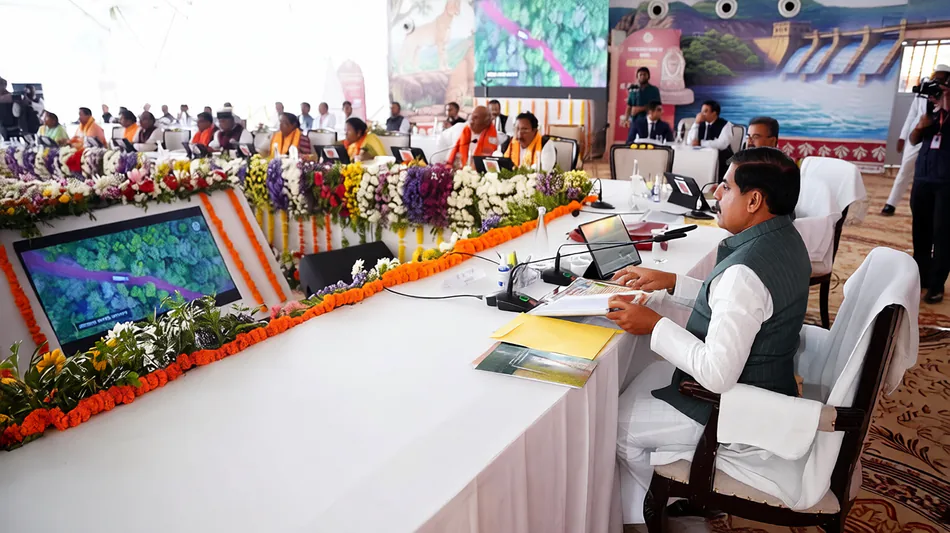
The Madhya Pradesh Cabinet, chaired by Chief Minister Mohan Yadav, has decided to abolish the two-child restriction for government employees, a policy that had been in place since 2001. The decision was announced during a special Cabinet meeting held at Gandhi Sagar in the Mandsaur district on Wednesday.
Chief Minister Mohan Yadav stated that the removal of the restriction aims to address the difficulties faced by government staff under the previous rules and responds to the declining reproduction rate observed in the state. Under the existing regulations, candidates with more than two children born after January 26, 2001, were ineligible for government employment. Furthermore, government employees who had more than two children were subject to disciplinary action.
The Cabinet approved the removal of relevant provisions under the Madhya Pradesh Civil Services (General Conditions of Service) Rules, 1961, and the Madhya Pradesh Civil Services (Conduct) Rules, 1965. With this amendment, ongoing disciplinary proceedings against government employees for having more than two children will be terminated.
In addition to personnel policy changes, the Cabinet approved a series of major industrial development projects aimed at boosting investment and employment across the state. The government cleared five new industrial parks and projects expected to attract investments worth ₹70,650 crore and generate approximately 3.14 lakh employment opportunities.
Among the key approvals is an agro park to be developed on 178 hectares in Basai village, Mandsaur district. This project is estimated to attract ₹3,200 crore in investment and create over 14,000 jobs. Additionally, a chemical park will be established on 3,500 acres at Kurlasi village in the Garoth tehsil of Mandsaur under the Central Government's Bhavya scheme. This initiative is projected to draw ₹15,000 crore in investment and provide employment to around one lakh people.
Other industrial developments include a bio-pharma park in Ratlam, spanning 453 hectares, which is expected to attract ₹18,000 crore and create 25,000 jobs. A textile and allied industries park will be developed on 341.10 hectares at Bhainsola village in the Dhar district, with an estimated investment of ₹6,150 crore and the potential to generate around 35,000 jobs. The Cabinet also approved the establishment of a multi-product industrial area in Pandhurna.
Beyond industrial infrastructure, the government approved several social and educational initiatives. A forest zoo and rescue centre will be constructed on 210 hectares in the Naulakhi Reserved Forest area of Ujjain at a cost of ₹855 crore. Chief Minister Yadav noted that this project is expected to benefit over 6,000 people through direct and indirect employment opportunities.
The Cabinet also cleared the establishment of Shri Radhe University in Morena district. The university is scheduled to begin academic operations from the 2027-28 session, aiming to provide higher education opportunities to students in the region. Additionally, the government approved a research and innovation park on 100 acres in Ujjain at an estimated cost of ₹237 crore. This facility will focus on promoting research in space science, agricultural technology, and emerging technologies.
In the realm of law enforcement, the Cabinet approved the creation of six special Narcotic Drugs and Psychotropic Substances (NDPS) courts in Indore, Mandsaur, Neemuch, Singrauli, Bhopal, and Rewa. Chief Minister Yadav linked this decision to Prime Minister Narendra Modi’s 2029 deadline for combating drug-related issues, stating that the special courts are intended to ensure the speedy disposal of narcotics cases.
Further approvals included amendments to the Madhya Pradesh Civil Aviation Policy, 2025. The revised policy extends viability gap funding (VGF) assistance for domestic air services from one year to four years and increases assistance for international services from one year to two years. The government also amended the Madhya Pradesh Industry Promotion Policy, 2025, and appointed the Confederation of Indian Industry (CII) as the national partner of the Madhya Pradesh Industrial Development Corporation for the next three years to promote investment.
To strengthen micro, small, and medium enterprises (MSMEs), the government approved the formation of MP MSME Limited with an initial financial provision of ₹10 crore. The MSME Infrastructure Development Scheme will continue for another five years at an estimated cost of ₹1,507 crore. The Cabinet also increased the sanctioned amount for construction work at Rewa Medical College from ₹321.94 crore to ₹414.17 crore.
Discussions were held regarding the second phase of the Omkareshwar Floating Solar Project, which includes an 800 MW battery energy storage system and a 200 MW floating solar power project. This expansion aims to strengthen renewable energy generation and storage capacity in the state.
The special Cabinet meeting at Gandhi Sagar was preceded by traditional rituals, including prayers to Mother Chambal. During this event, the Chief Minister laid the foundation stone for five projects under the Gandhi Sagar Eco-Tourism Project, costing ₹40.50 crore. These initiatives are designed to boost tourism in the region, which is known for its rich wildlife, including the cheeta project and rare birds.
Following the meeting, Chief Minister Mohan Yadav and several ministers traveled by minibus to the Khimla plant in Neemuch district. The Gandhi Sagar Dam is currently being developed with India’s largest and most modern pump-hydro project, which is expected to increase electricity production twenty-fold to approximately 2,000 megawatts.
P.Andilet--MC-UK