US War Secretary Hegseth Visits Bogotá to Deliver C-130 Aircraft Amid Security Concerns
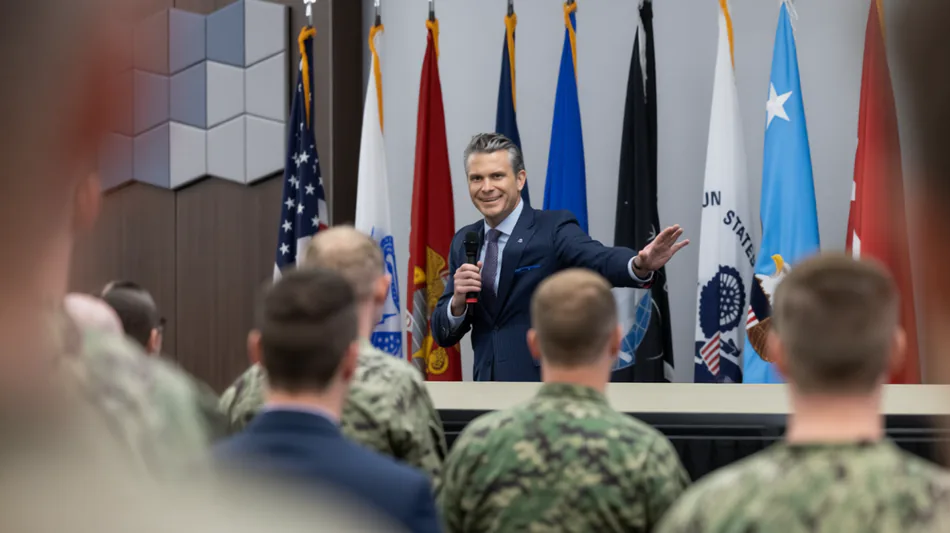
US Secretary of War Pete Hegseth arrived in Bogotá on Wednesday to reinforce military ties with Colombia and deliver a C-130 Hercules transport aircraft. The visit underscores Washington’s focus on counter-narcotics efforts while the country faces renewed threats from organized crime and prepares for nationwide protests.
US Secretary of War Pete Hegseth arrived in Bogotá on Wednesday to reinforce military cooperation with Colombia and deliver a C-130 Hercules transport aircraft to the Colombian Armed Forces. The diplomatic visit coincides with heightened security concerns, including recent attacks on strategic road infrastructure and a US Embassy warning regarding upcoming nationwide protests.
Hegseth’s arrival marks a critical moment for bilateral relations as Washington seeks closer collaboration against drug trafficking and organized crime. During his brief stay in the Colombian capital, he is scheduled to meet with Defence Minister Major General (ret.) Jorge Eduardo Mora and senior military commanders. The agenda for these discussions includes military capabilities, intelligence sharing, the increasing use of drones by illegal armed groups, and regional counter-narcotics operations.
The delivery of the C-130 Hercules represents a tangible component of a broader US military assistance program that may include two additional aircraft. The aircraft is considered a vital logistical asset for Colombia due to its ability to transport personnel, equipment, and humanitarian supplies across difficult terrain. This capability is particularly important for military operations in remote regions, including areas bordering Venezuela and along the country’s Pacific and Caribbean coastlines.
The visit reflects Washington’s renewed interest in regional security cooperation through the US-led Shield of the Americas initiative. Colombia joined this framework to coordinate efforts against drug cartels and transnational criminal organizations, which could facilitate expanded intelligence sharing and operational cooperation among participating governments. Hegseth’s trip follows a recent visit by US Joint Chiefs of Staff Chairman General Dan Caine, highlighting the growing military dialogue between Washington and Bogotá. The two nations maintain a longstanding security partnership, with Colombia serving as a key regional ally in counter-narcotics operations and the fight against illegal armed groups.
Defence Minister Mora confirmed the last-minute nature of the visit before Congress, describing the meeting as an opportunity to discuss how Washington can continue supporting Colombia’s efforts to restore security. The focus on military assistance comes as the country confronts renewed attacks on strategic infrastructure and the prospect of nationwide demonstrations.
The timing of Hegseth’s arrival overlaps with significant domestic unrest. The US Embassy in Bogotá issued a security alert on November 17, advising American citizens and residents to exercise caution during the Paro Nacional (National Strike) scheduled for Thursday, November 19. Labour unions, civic groups, and political organizations have called for the one-day strike, with demonstrations planned in Bogotá, Medellín, Cali, Barranquilla, and Bucaramanga.
The Embassy warned of potential road closures, traffic disruptions, and interruptions to public transport. In Bogotá, particular attention has been drawn to TransMilenio, whose stations and surrounding infrastructure could be affected by the movement of demonstrators. The advisory recalled that previous national mobilizations have resulted in confrontations between violent protesters and police. American citizens were advised to avoid large crowds, monitor local announcements, and allow additional time for travel.
In Bogotá, the demonstration is scheduled to begin at Parque Nacional before moving towards Plaza de Bolívar. Union leaders state that the protests are intended to defend social rights and oppose the economic measures of President Abelardo de la Espriella’s government. While the Embassy’s warning is precautionary, its publication underscores international concerns about the potential impact of large-scale demonstrations on public order and mobility in Colombia’s most important cities.
The security situation in Colombia has deteriorated in recent days due to a series of explosive attacks against toll stations and other strategic road infrastructure. These incidents have raised concerns about a possible campaign to disrupt the country’s principal transport corridors. On Sunday, November 15, during a long weekend, two explosions damaged toll facilities at Pipiral on the Bogotá–Villavicencio highway in Meta and near Aipe on the Neiva-Espinal corridor in Tolima. The incidents prompted road closures and heightened security checks for vehicles.
The situation worsened on November 17 when authorities discovered a taxi containing approximately 60 kilograms of explosives near the Flandes toll station on the road connecting El Espinal and Girardot in Tolima. Army explosives specialists neutralized the device through a controlled operation, preventing what could have been a serious attack on one of the central country’s busiest transport corridors.
These incidents have raised questions about a possible strategy by FARC dissident factions to target toll infrastructure and undermine the movement of goods and passengers before the start of the Christmas holiday season. Although investigations into individual attacks remain ongoing, the pattern of violence suggests an emerging threat to civilian transport networks and critical infrastructure.
The economic implications of these attacks are considerable. According to figures published by the Banco de la República, approximately 87% of Colombia’s cargo tonnage is transported by road. Highways are indispensable to the country’s supply chains, connecting agricultural producers, industrial centers, ports, and commercial markets. Attacks against toll stations do more than damage collection infrastructure; they can interrupt freight movements, delay commercial deliveries, and affect thousands of passengers traveling between Colombia’s principal cities.
For a country whose economy depends so heavily on road transport, protecting these corridors is increasingly a national security priority. As President Trump’s senior official meets with Colombia’s military leadership, the challenges confronting the country extend well beyond counter-narcotics operations. Maritime trafficking routes, armed groups, drone warfare, and attacks against strategic infrastructure are all part of an increasingly complex and shifting security landscape.
B.Foster--MC-UK