Nigeria Envoy's $61 Billion Claim Faces Scrutiny Amid Diplomatic Tensions
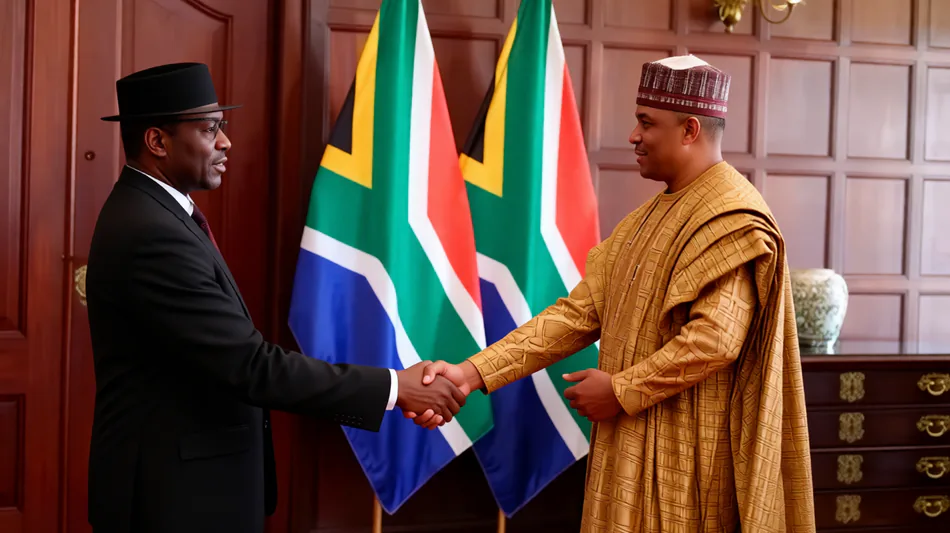
Nigeria’s new High Commissioner to South Africa, Femi Fani-Kayode, has sparked diplomatic debate by repeatedly citing a $61 billion figure as proof of Nigeria’s contribution to ending apartheid. Experts and analysts warn that the number is an unverified aggregate from 2010, not a factual accounting, potentially undermining Nigeria’s credibility in current bilateral relations.
Nigeria’s newly appointed High Commissioner to South Africa, Femi Fani-Kayode, has drawn criticism from analysts and experts for relying on a disputed financial figure to define his country’s historical role in the anti-apartheid struggle. Since presenting his credentials in Pretoria, Fani-Kayode has invoked the sum of $61 billion in multiple speeches, using it to argue that Nigeria’s sacrifice sets it apart from other African nations and warrants specific diplomatic recognition.
The figure, however, lacks the evidentiary foundation required for such a significant diplomatic claim. It originates from a single sentence in a 2010 opinion piece by Dr. Nomfundo Xenia Ngwenya of the South African Institute of International Affairs (SAIIA). The text states that Nigeria contributed an estimated US$61 billion toward the anti-apartheid effort by the end of apartheid in 1994. No methodology, breakdown, or primary source data accompanies this assertion in the original commentary.
Analysts point out that the number is an aggregate estimate spanning more than three decades, bundling various forms of support including regional aid to Frontline States, subventions to liberation movements, scholarships, hosting of exiles, and diplomatic costs. Crucially, roughly two-thirds of this total represents forgone oil revenue—opportunity cost rather than cash disbursed. Presenting this aggregate as direct financial contribution is described by critics as a category error.
The figure was widely circulated but remained unverified. An Institute for Security Studies (ISS) Africa report in 2015 noted the lack of verification, and subsequent fact-checkers have confirmed its origin while cautioning against treating it as established fact. Secondary commentary later attempted to decompose the figure, suggesting $41 billion represented forgone oil revenue, but this breakdown itself remains unverified and was not present in the original 2010 source.
The controversy arises at a sensitive moment for Nigeria-South Africa relations, which have recently experienced strain. Diplomatic observers argue that Fani-Kayode’s reliance on an unaudited estimate risks damaging Nigeria’s credibility. While South African officials have acknowledged Nigeria’s historic support, they have not endorsed the $61 billion figure.
Critics emphasize that the liberation of South Africa was achieved through a coalition of states and peoples, not the unilateral effort of one nation. Countries such as Tanzania, Zambia, Mozambique, Angola, Zimbabwe, and Botswana bore significant costs in terms of military raids, economic warfare, and loss of sovereignty. These sacrifices are difficult to quantify in monetary terms but were substantial.
The invocation of the $61 billion figure is viewed by some commentators not merely as a factual imprecision but as an attempt to construct a hierarchy of sacrifice among African nations. This approach is seen as counterproductive to resetting bilateral relations, which require substantive and credible diplomatic engagement rather than inflated historical claims.
Nigeria’s record in the struggle against apartheid remains described as honorable and substantial. However, experts insist that this legacy does not require inflation to be respected. Accurate representation of historical support, distinguishing between verified aid and estimated opportunity costs, is deemed essential for maintaining diplomatic integrity and fostering genuine regional solidarity.
C.Osborn--MC-UK