Pioneer African Olympic skier returns to Sarajevo slopes for documentary / Photo: Georges BENDRIHEM - AFP/File

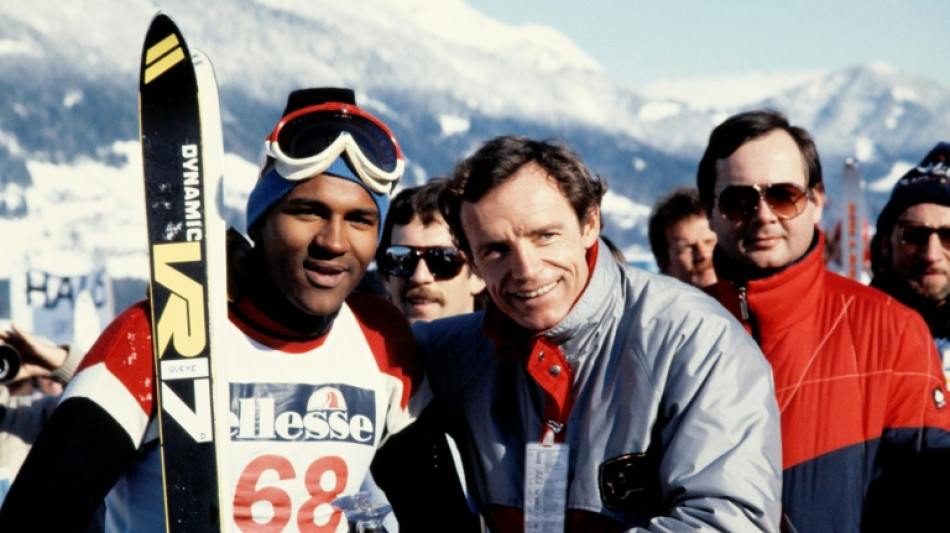
In 1984, Lamine Gueye carved out a piece of Olympic history in Sarajevo by becoming the first Black African to compete in the Winter Games.
More than four decades later, he strapped on his skis and returned to the same slopes for a new documentary about the Senegalese sportsman and his legacy.
A few weeks before the Milan-Cortina Olympics open on February 6, Gueye arrived back in the Bosnian capital for the film project and found a city that still embraced him.
"You always remember your first time. The first time you fall in love, your first job, your first paycheck," the cheerful 65-year-old, who retired from skiing some two decades ago, told AFP.
"For me, it was my first Olympic Games, and it was absolutely unforgettable," he added.
News of his return quickly spread through a city that takes pride in hosting the last major sporting event of the former Yugoslavia, of which Bosnia was then a part.
In between shoots, as he explored its cobbled lanes, lined with artisan shops and dotted with impressive mosques and churches, he was routinely stopped by fans asking for photographs.
"In 1984, I didn't have a minute to myself... to soak up that warm atmosphere," he said.
- Between Cold War rivals -
Born in Dakar to a Senegalese father and a French mother, Gueye is a dual Senegalese and French national who now lives between Paris and Dakar.
He is widely recognised as a trailblazer of winter sports in Senegal, founding his country's ski federation, which he still heads today.
But when he arrived in Sarajevo, however, he was just 23 -- and the sole athlete representing Senegal, taking on the responsibility of "coach, secretary, treasurer, racer".
He still vividly remembers the opening ceremony in front of 60,000 spectators.
Marching alone under his country's flag, he found himself wedged between the large US and Soviet delegations at the height of the Cold War.
"The two ice hockey teams had things to say to each other that weren't always friendly," Gueye joked.
But for those watching, his presence was a powerful symbol, said Aleksandra Fracassa Kostic, the Serbian director of the film Sarajevo Downhill (Sarajevski Spust).
"Standing there all by himself between them, he was like a messenger of peace," she said.
- 'I didn't finish last' -
Eight years later, Bosnia plunged into a brutal war.
Sarajevo endured a siege lasting nearly four years, which left much of the city in ruins and more than 11,000 people dead.
"When we turned on our TVs and saw the war here, it was a disaster," Gueye said.
"From one of the most beautiful expressions of humanity... to absolute horror."
But three decades after the war, Gueye said the city's residents were "incredible" for keeping the values he remembered from the Games.
"They could have come away with nothing but a message of hatred. That's not the case," said the Olympian, who also competed at the 1992 and 1994 Games.
Bosnian actor and film producer Adnan Haskovic said his team chose to focus on Gueye's story as one of triumph over "prejudice" at the time.
"What mattered wasn't an Olympic victory; his participation itself was the triumph of the human spirit," Haskovic said.
On February 16, 1984, he finished 51st in the downhill on the Bjelasnica course.
The race was won by Bill Johnson, securing the first Olympic gold medal in alpine skiing for the United States. But it was a victory for Gueye, too.
"I didn't finish last -- I think I beat four or five competitors."
A.White--MC-UK